
Why Is My AC Running but Not Cooling My House?
If your AC is running but not cooling your house, the problem could be as simple as a dirty air filter or thermostat setting—or it could point to an issue that needs professional attention. Before assuming you need an AC repair or replacement, there are several safe checks you can make yourself to better understand what may be happening.
Quick Answer: Why Is My AC Running but Not Cooling?
An AC can run without properly cooling your home for several reasons, including a dirty air filter, incorrect thermostat settings, blocked vents, restricted airflow, a dirty outdoor unit, or a problem that requires professional HVAC attention. Start with the simple checks below before assuming your air conditioner needs to be repaired or replaced.
Not Sure What Your AC Problem Means?
Answer 7 quick questions about what your AC is doing and get a personalized next-step recommendation. It takes about a minute.
7 Things to Check When Your AC Is Running but Not Cooling
1. Check Your Thermostat Settings
Make sure your thermostat is set to “Cool” and the temperature is set below the current indoor temperature. If the thermostat is set to “Fan” instead of “Auto,” the system may continue circulating air even when the air conditioner is not actively cooling.
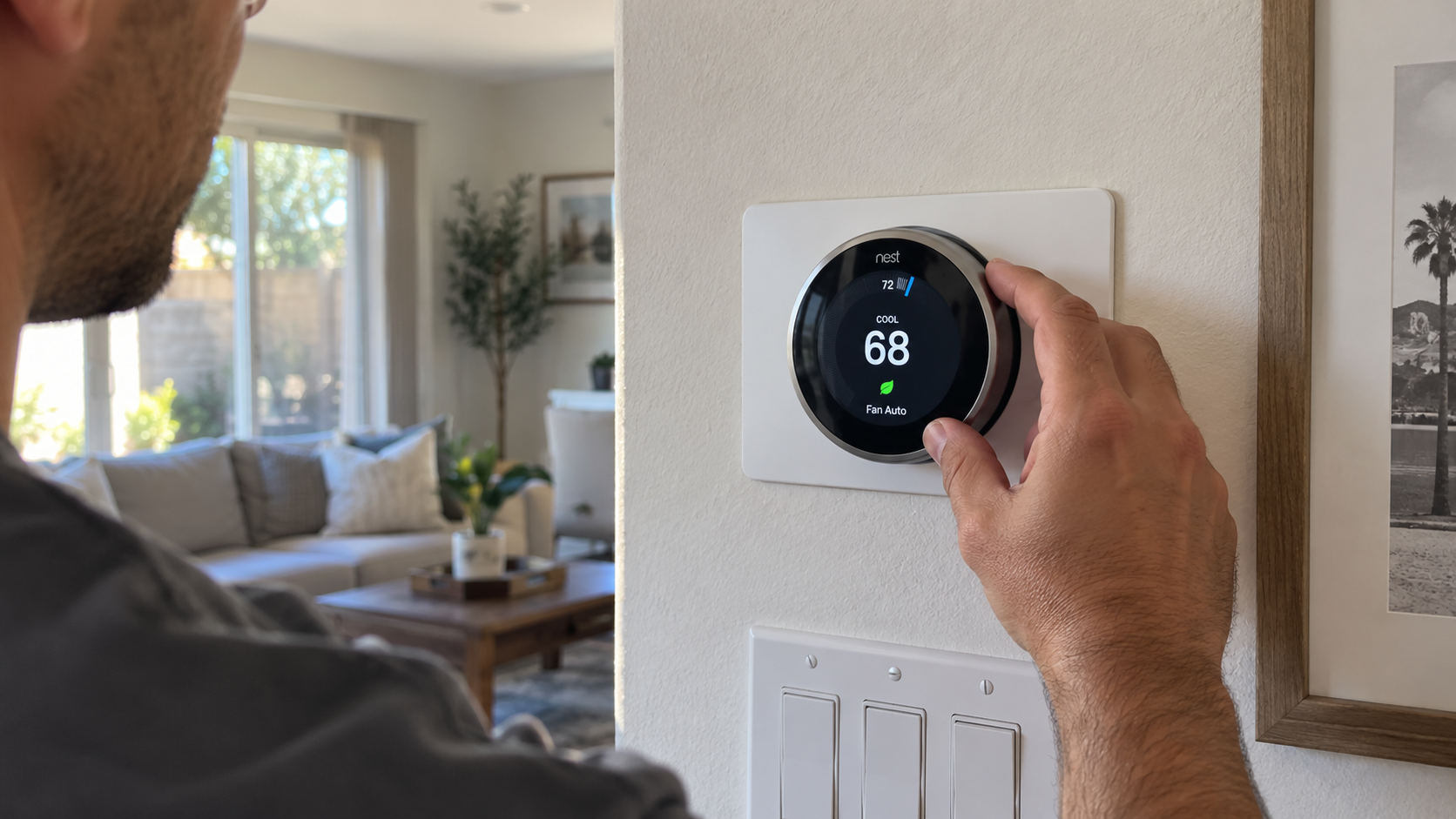
Quick check: Set the thermostat to Cool + Auto, lower the temperature a few degrees, and give the system several minutes to respond.
2. Check Your Air Filter
A dirty or clogged air filter can restrict airflow through your HVAC system, making it harder for your air conditioner to cool your home effectively. Check the filter for visible dirt and buildup, and replace it if needed using the correct filter type and size for your system.
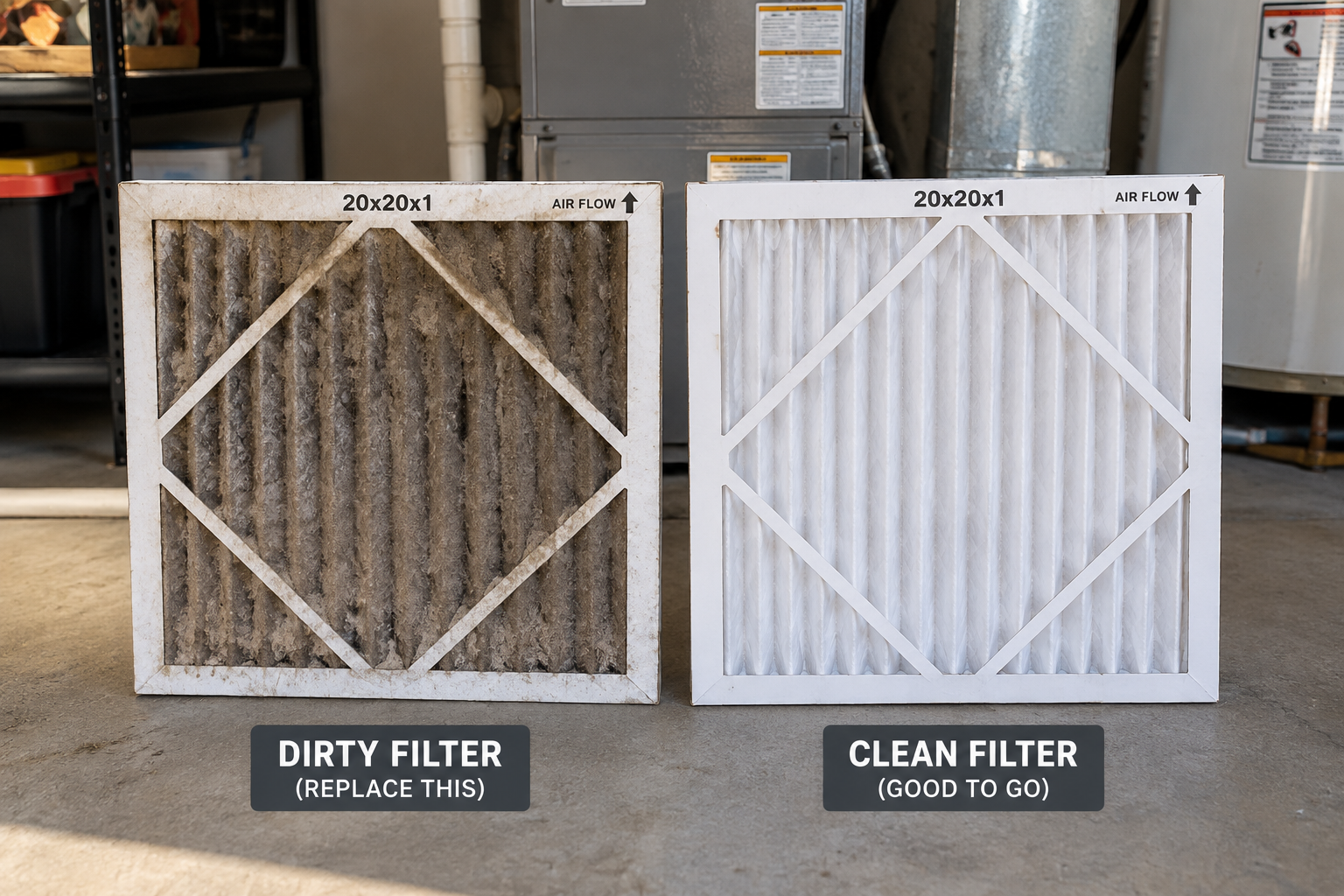
Quick check: Hold the filter up to a light. If very little light passes through because of dust and debris, it may be time to replace it.
3. Make Sure Your Vents Are Open and Unblocked
Closed, blocked, or obstructed supply vents can reduce airflow and make certain rooms feel warmer even while your AC is running. Check that vents are fully open and that furniture, rugs, curtains, or other household items are not blocking airflow.
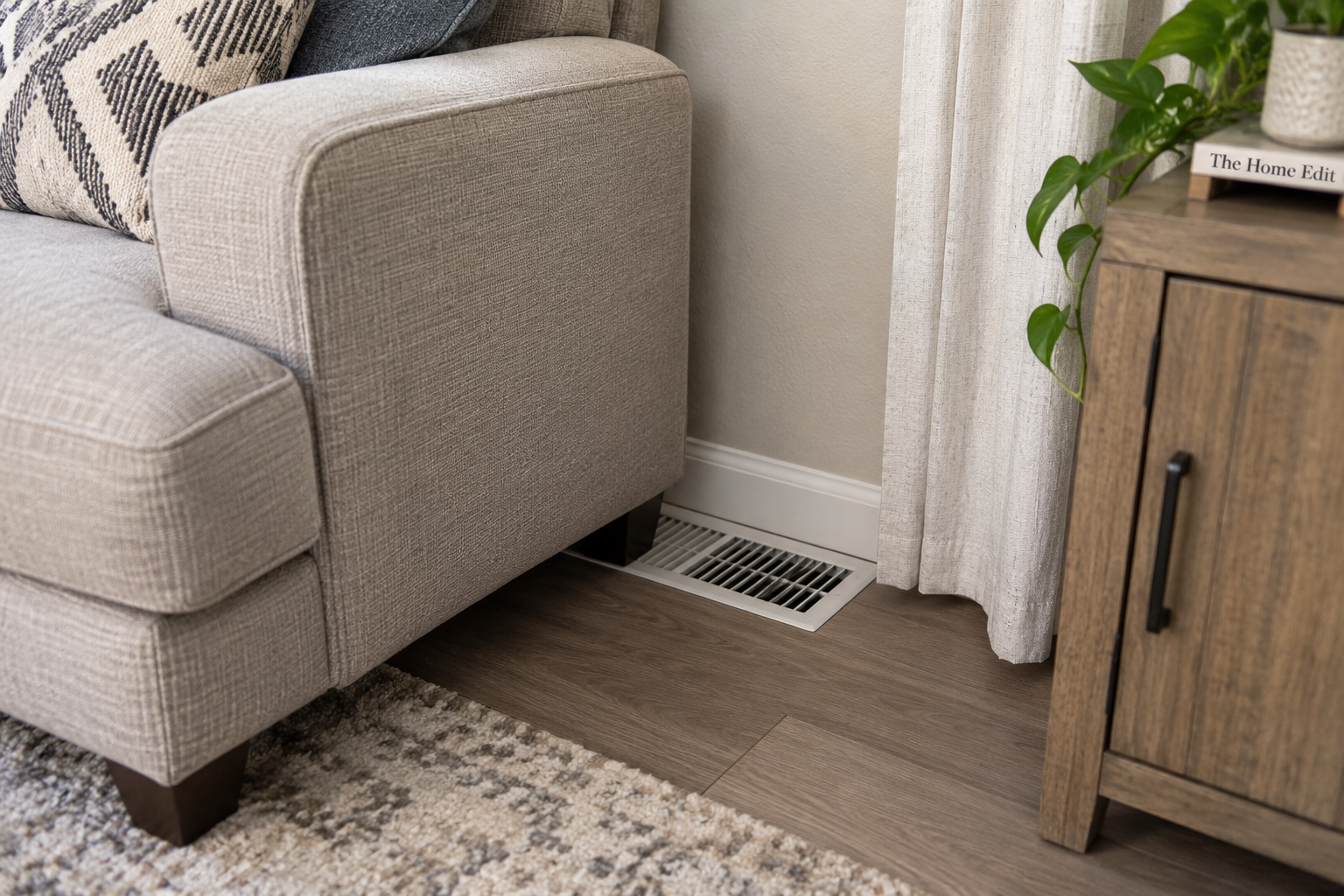
Quick check: Walk through your home and compare the airflow coming from each supply vent. If one or more rooms have noticeably weaker airflow, make a note of it. Persistent weak airflow may be worth discussing with an HVAC professional.
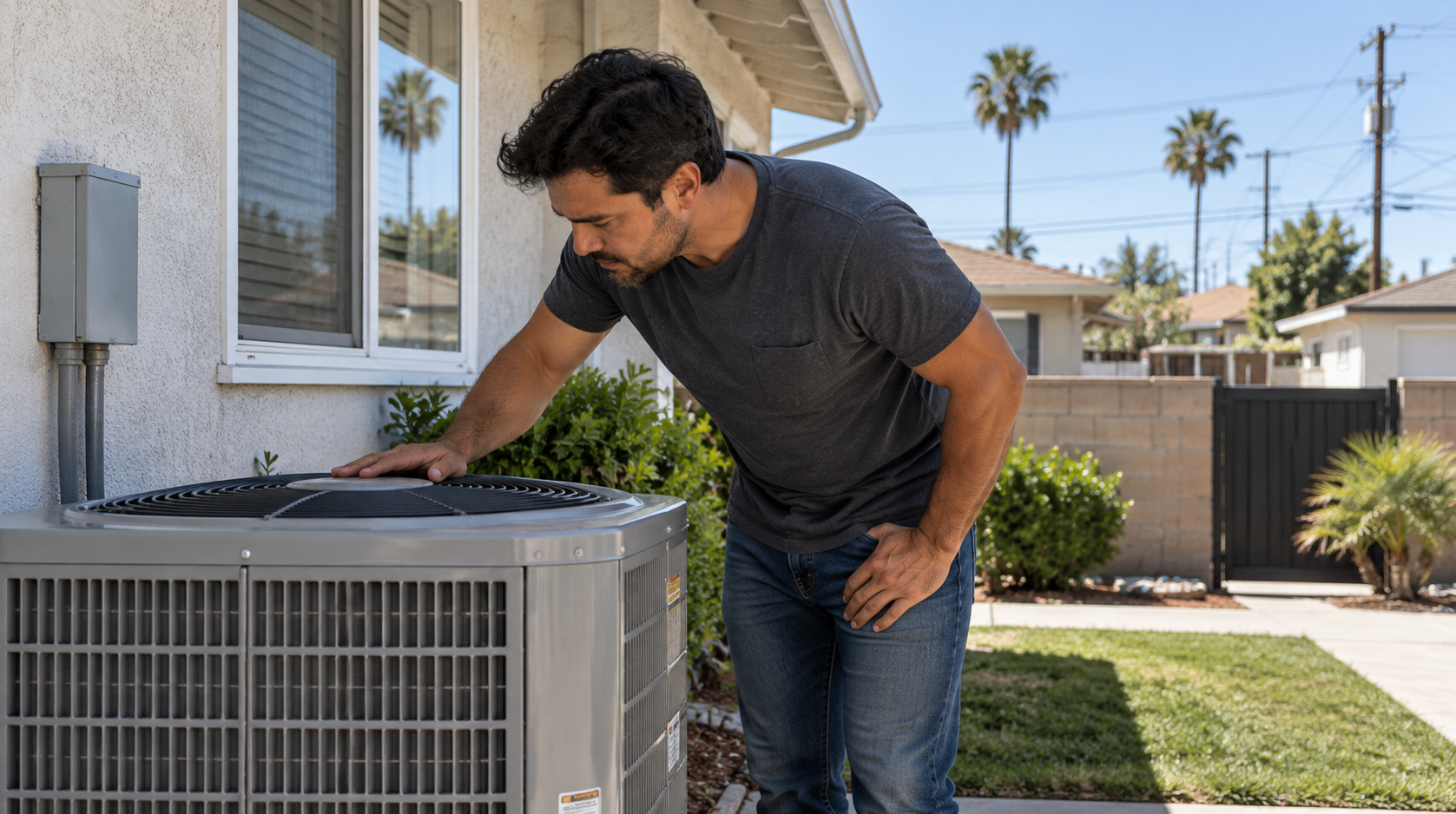
4. Check the Outdoor AC Unit
Your outdoor AC unit needs adequate airflow to release heat from your home. Leaves, dirt, grass clippings, weeds, or other debris around the unit can interfere with airflow and may reduce cooling performance.
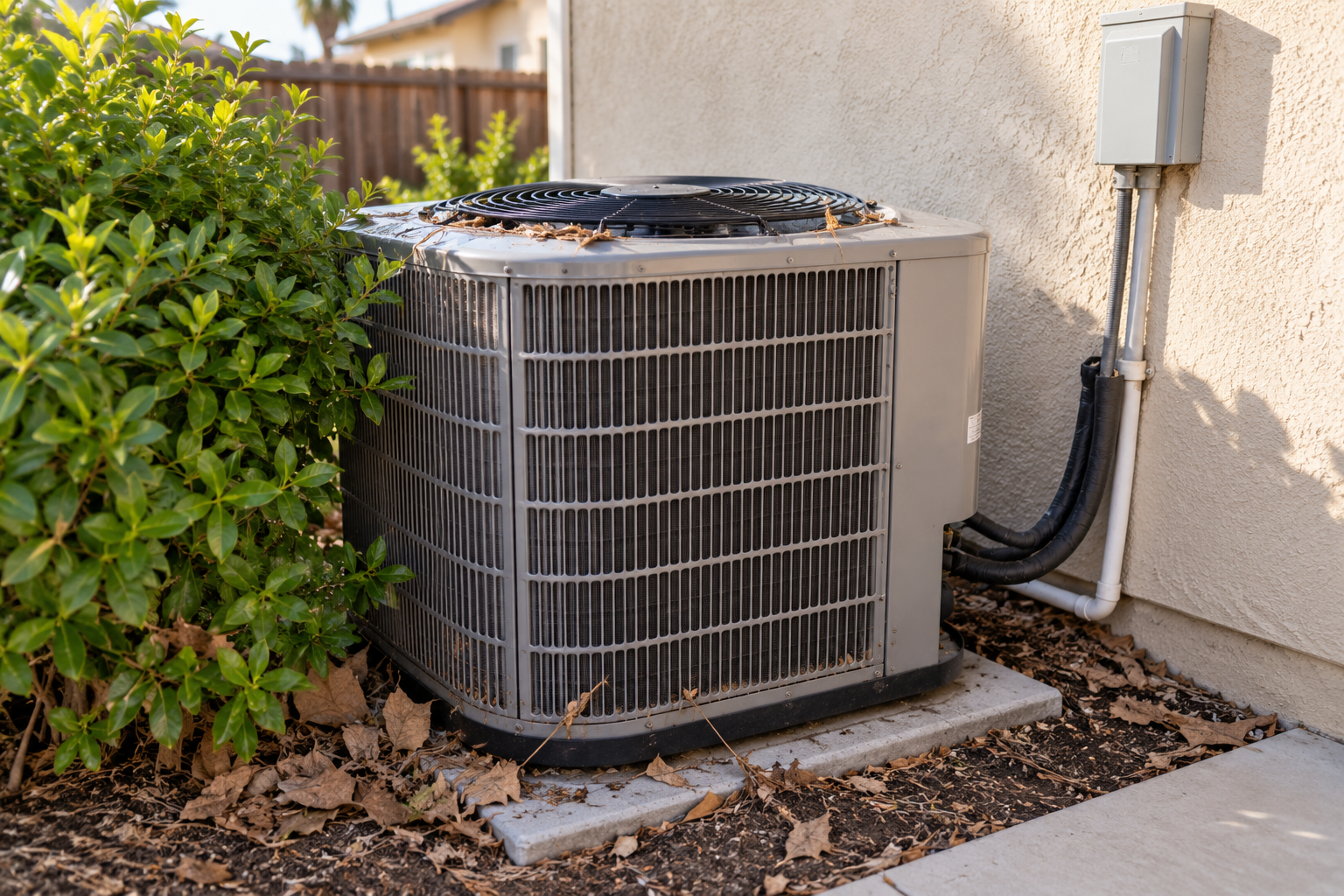
Quick check: Look around the outdoor unit and make sure the area is clear of visible debris or vegetation. Avoid opening the unit, removing panels, or attempting electrical or mechanical repairs yourself. If the unit appears damaged, unusually dirty, or isn't operating normally, have an HVAC professional inspect it.
5. Check for Ice or Frost on the AC System
Ice or frost on the refrigerant lines or indoor components can be a sign that your AC system is not operating properly. Restricted airflow and other HVAC issues can contribute to freezing, and continuing to run the system may make the problem worse.
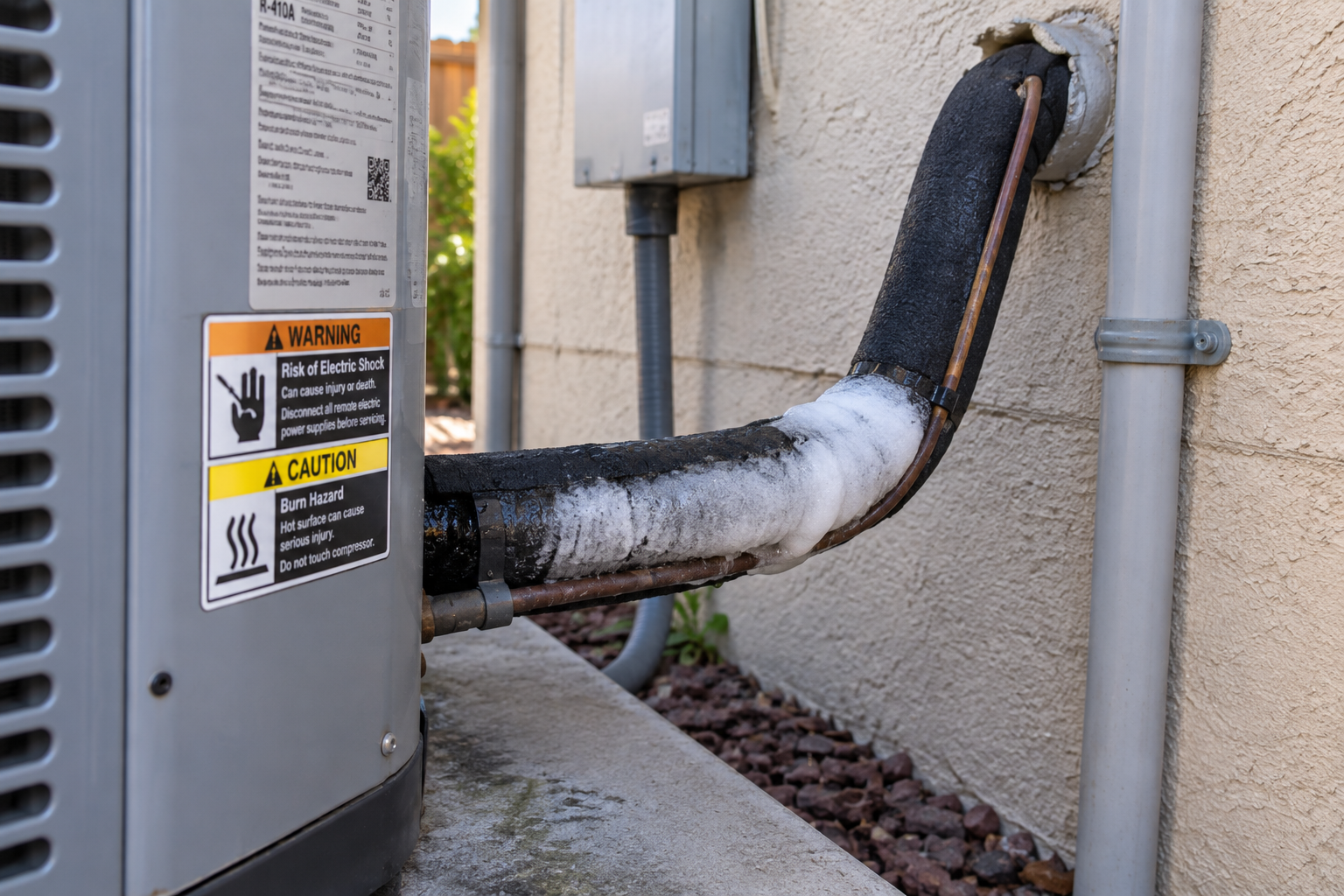
Quick check: Look for visible ice or frost around accessible refrigerant lines or near the indoor unit without removing any panels. If you see ice, turn off the cooling system and contact an HVAC professional rather than attempting to diagnose or repair the problem yourself.
6. Pay Attention to How Long Your AC Is Running
On hot Southern California days, your air conditioner may run for longer periods to keep your home comfortable. But if the system seems to run almost constantly without reaching the temperature set on your thermostat, there may be an airflow, equipment, or other HVAC issue affecting its cooling performance.
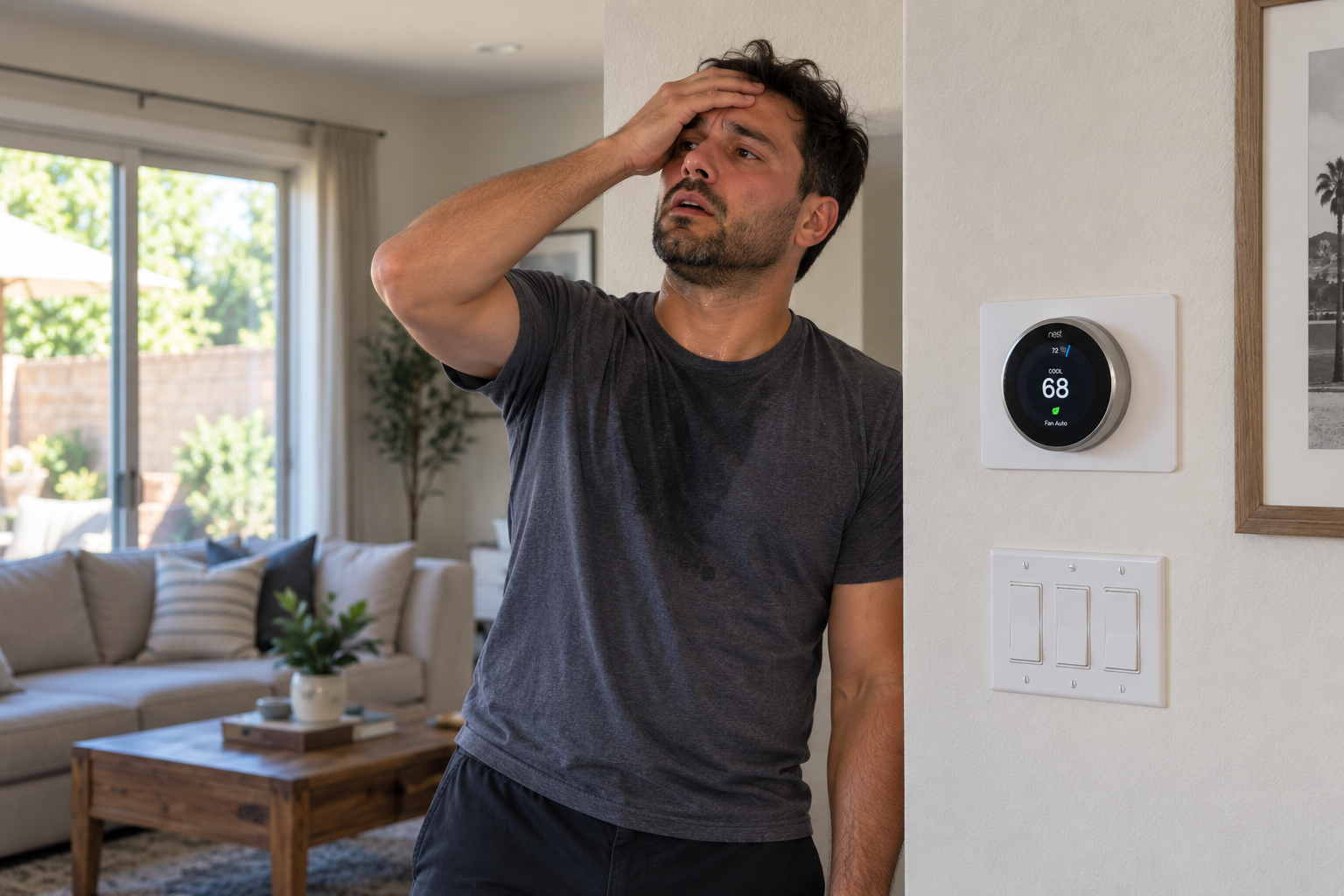
Quick check: Compare the thermostat setting with the actual temperature inside your home. If your AC continues running for extended periods but the indoor temperature isn't getting closer to the setting, make note of it. Persistent cooling problems may warrant an HVAC professional's evaluation.
7. Check Whether Your AC Is Blowing Cool Air
If your system is running and air is coming from the vents, pay attention to whether that air actually feels cool. Air that feels warm or only slightly cooler than the room may indicate that the system is circulating air without cooling your home effectively.
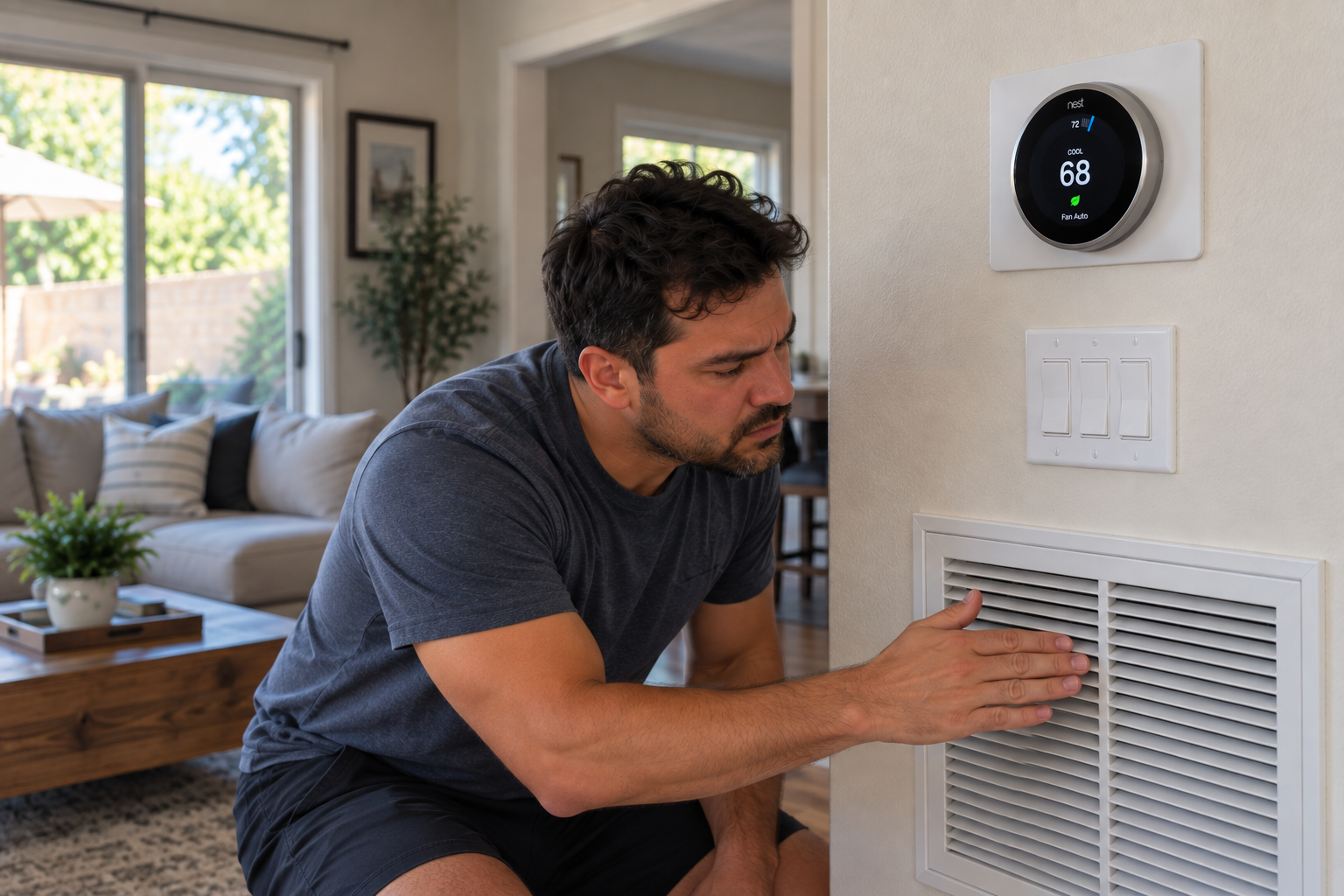
Quick check: Place your hand near a supply vent while the AC is actively cooling. The air should feel noticeably cooler than the room. If the airflow is strong but the air remains warm, avoid attempting refrigerant, electrical, or internal equipment repairs yourself. An HVAC professional can inspect the system and determine what may be preventing it from cooling properly.
What If Your AC Is Still Running but Not Cooling?
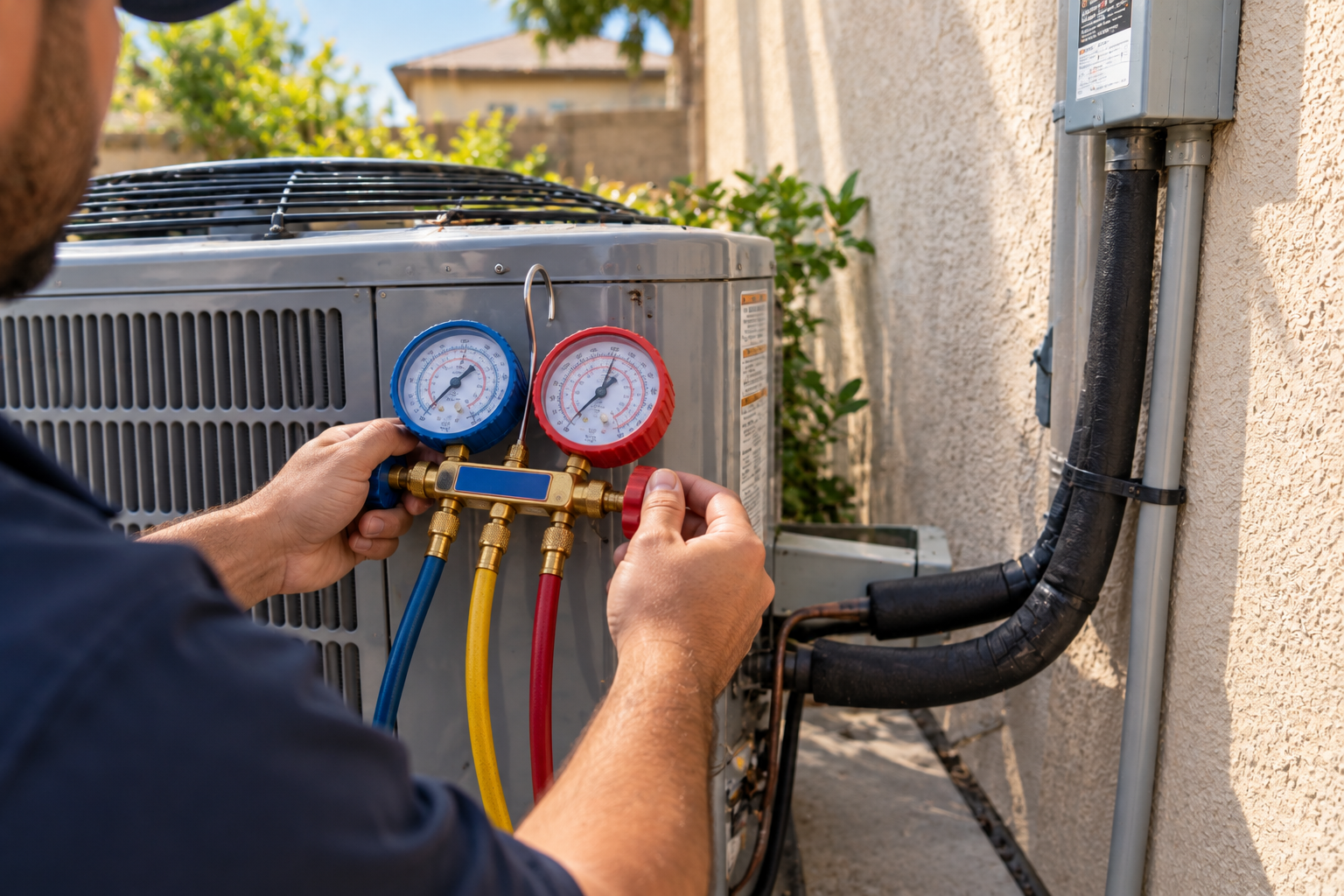
If you've checked the thermostat, air filter, vents, outdoor unit, and other visible issues but your home still isn't cooling properly, the problem may require professional evaluation. Issues involving refrigerant, electrical components, motors, coils, ductwork, or other internal HVAC components should be inspected by a qualified professional.
When to consider professional help: If your AC continues running without cooling the home, repeatedly freezes, blows warm air, has very weak airflow, makes unusual noises, or cannot reach the thermostat setting, it may be time to have the system evaluated.
Avoid opening equipment panels or attempting refrigerant or electrical repairs yourself.
How to Help Keep Your AC Working Properly
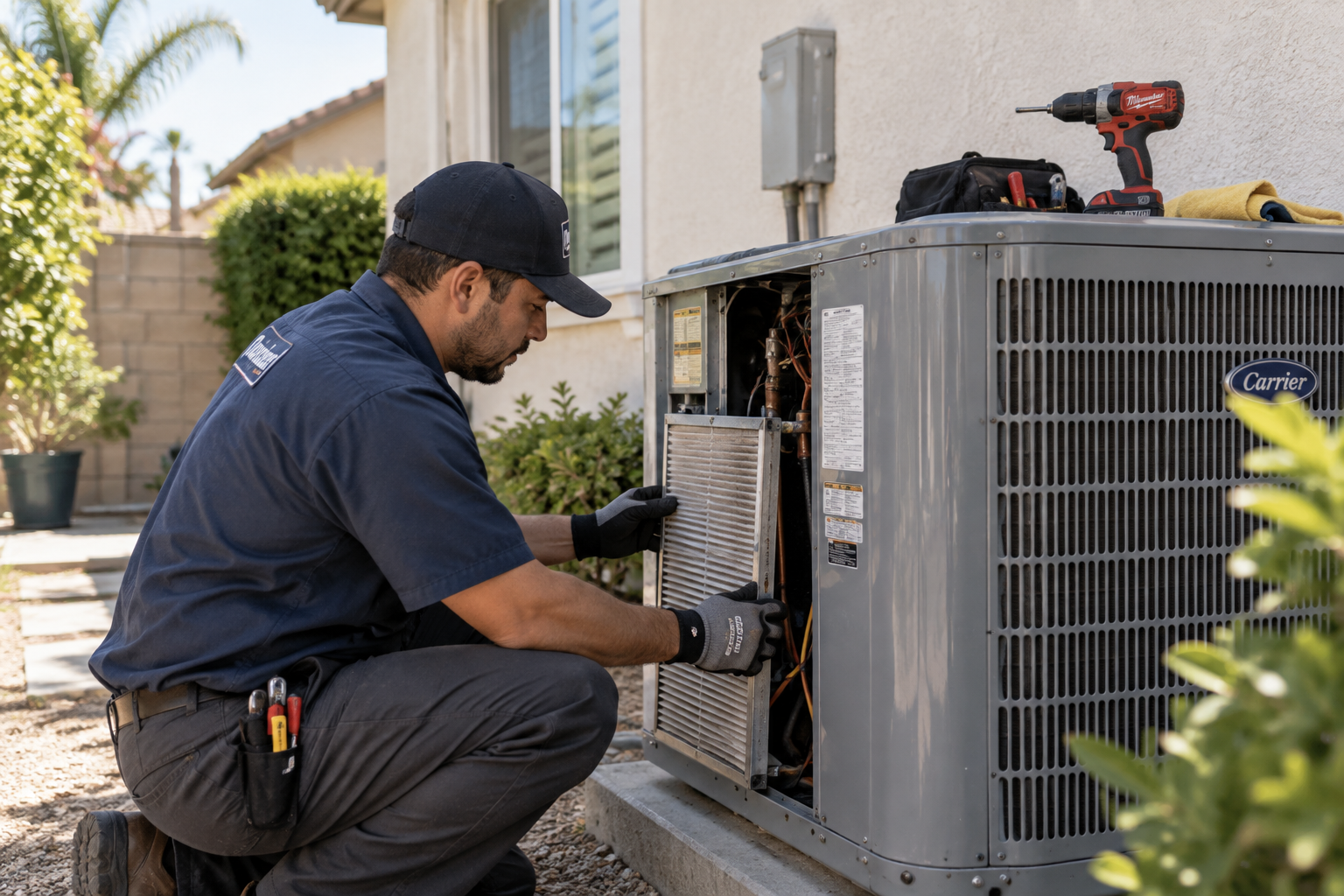
Regular maintenance can help your HVAC system operate efficiently and may help identify smaller problems before they become larger repairs. Homeowners can handle some basic maintenance themselves, while other work is better left to an HVAC professional.
Best practices: Check your air filter regularly and replace it when needed, keep supply and return vents unobstructed, keep leaves and debris away from the outdoor unit, use reasonable thermostat settings, and pay attention to changes in cooling performance, airflow, sounds, or energy usage.
Consider having your HVAC system professionally inspected and maintained periodically, particularly before periods of heavy cooling use.
Frequently Asked Questions About an AC Running but Not Cooling
How Long Should I Let My AC Run Before Worrying?
On hot days, an air conditioner may run for longer periods, especially when outdoor temperatures are high or your home is trying to recover from a warmer indoor temperature. However, if your AC runs continuously for an extended period and the indoor temperature is not getting closer to the thermostat setting, there may be a problem affecting cooling performance.
Quick answer: Pay more attention to whether your home is actually getting cooler than to a specific number of minutes. If the temperature is not dropping or the system cannot reach the thermostat setting, consider having the AC evaluated by an HVAC professional.
Why Is My AC Blowing Air but Not Cold Air?
If air is coming from your vents but it does not feel noticeably cool, the system may be circulating air without cooling it effectively. Possible causes can include incorrect thermostat settings, restricted airflow, a dirty air filter, frozen components, or an HVAC problem that requires professional evaluation.
Quick answer: First confirm that your thermostat is set to Cool, check the air filter, and make sure your vents are open and unobstructed. If the system continues blowing warm or room-temperature air, have an HVAC professional evaluate the system.
Can a Dirty Air Filter Cause My AC to Run but Not Cool?
Yes. A dirty or clogged air filter can restrict airflow through your HVAC system, which may reduce cooling performance and cause the system to run longer while trying to reach the temperature set on your thermostat.
Quick answer: Check your air filter for visible dirt and buildup. If it appears clogged, replace it with the correct filter type and size for your system. If cooling problems continue after replacing the filter, another issue may be affecting the system.
Ice or frost can develop when an air conditioning system is not operating properly. Restricted airflow can contribute to freezing, but other HVAC issues may also be involved. Ice on accessible refrigerant lines or other visible components should not be ignored.
Quick answer: If you see ice or frost, turn off the cooling system and allow it to stop operating. Do not remove equipment panels or attempt refrigerant or electrical repairs yourself. If the system freezes again or does not cool properly, have an HVAC professional evaluate it.
Why Is There Ice on My AC?
Should I Turn My AC Off If It Is Not Cooling?
If your AC is running but not cooling, whether you should turn it off depends on what you observe. Simple issues such as an incorrect thermostat setting may be easy to correct, but visible ice or frost, unusual noises, burning odors, or other signs that the system is not operating normally should not be ignored.
Quick answer: If you see ice or frost, notice a burning smell, hear unusual mechanical or electrical sounds, or suspect an equipment problem, turn the system off and have it evaluated by an HVAC professional. Avoid opening equipment panels or attempting electrical or refrigerant repairs yourself.
AC Help for Homeowners in the South Bay and Surrounding Los Angeles Areas
Home Transformation Experts helps homeowners throughout the South Bay and surrounding Los Angeles communities, including Carson, Long Beach, Torrance, Gardena, Lakewood, Lomita, San Pedro, Wilmington, Signal Hill, Cerritos, Bellflower, Paramount, Compton, and Redondo Beach connect with local professionals for HVAC and other home improvement projects.
If your AC isn't cooling properly, you're considering replacing an older system, or you simply have questions about improving your home's heating and cooling, we can help you explore your options and connect you with the right local professional.
Still Not Sure? Have Questions? Thinking About an Upgrade?
If your AC still isn't cooling properly—or you're wondering whether repair, replacement, or an HVAC upgrade makes sense for your home—Home Transformation Experts can help you take the next step.
Learn more about residential HVAC repair, replacement, installation, and heating and cooling options available to Southern California homeowners.